“I left a director role at 59 and built something I actually own.”
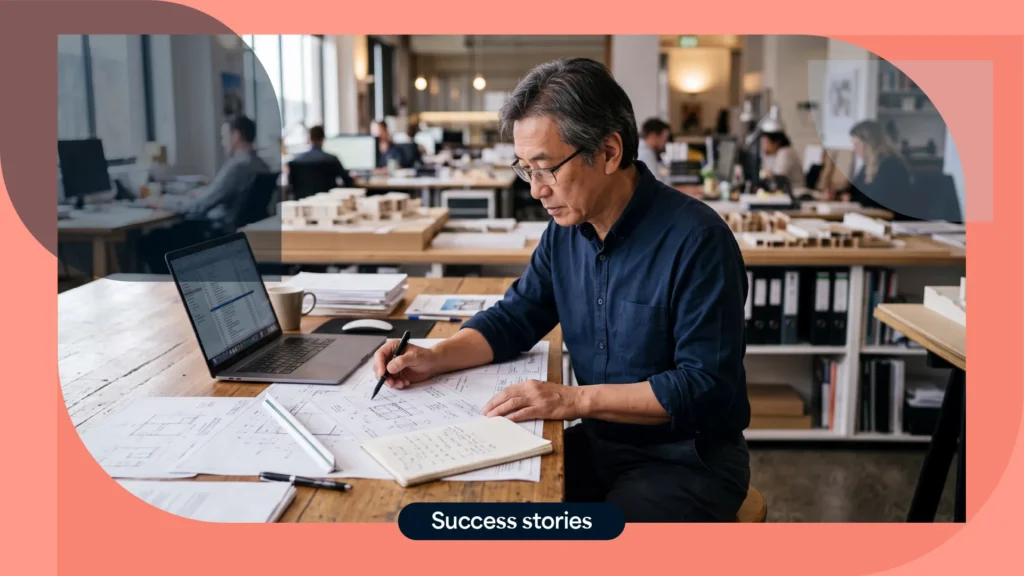
David K. 61, Melbourne, VIC | Former Engineering Director, infrastructure sector
David had spent his career in infrastructure engineering, roads, rail, utilities, working his way from graduate engineer to director over 35 years. He was good at managing large, complex projects and large, complex teams. He was less good, by his own admission, at sitting in the meetings that surrounded them.
At 59, after a particularly difficult period of organisational restructuring, he made a decision that surprised almost everyone who knew him professionally: he handed in his resignation without another role lined up.
“Everyone thought I had lost my mind. My wife thought I had lost my mind. I had a mortgage, two kids who were almost but not quite financially independent, and no plan. What I had was a very clear sense that the next ten years could not look like the last five.”
— David
Building the portfolio
David spent the first three months doing what he describes as thinking. He mapped what he was genuinely good at, what he found energising, and what the market would actually pay for. The answer that kept emerging: project governance and risk advisory for major infrastructure projects.
He reached out to his former employer about consulting support on a project he had been leading at the time of his departure. They said yes within a week. That engagement became his first client and provided the financial bridge he needed to build everything else.
Over the following 18 months, David built a portfolio that now includes: two ongoing advisory clients in infrastructure, a seat on the board of a regional water authority, a part-time teaching role at a university where he supervises engineering postgraduates, and a mentoring arrangement with a younger project manager he supervised ten years ago.
“The income is not what it was as a director. It is close, but not the same. What is different is that everything I do, I have chosen. Nobody allocates my time but me.”
The parts nobody talks about
David is candid about the parts of the transition that were harder than expected. The loss of the team was significant, the day-to-day of being a director had been exhausting partly because of the people weight it involved, and he had not realised how much he would miss that weight when it was gone.
He also underestimated the administrative overhead of operating as a sole trader, the invoicing, the GST, the professional indemnity insurance, the absence of an HR department and IT support desk. These are not insurmountable, but they are not trivial either.
The financial transition required deliberate planning. He worked with a financial adviser to model his superannuation options, establish an appropriate business structure, and ensure he had adequate income protection coverage. He describes this as one of the best investments he made in the early months.
Two years on
David does not describe his portfolio career as retirement. He is working, often hard, and he intends to keep working for at least another decade. What has changed is the relationship between the work and the rest of his life.
“I went for a run at 10am on a Tuesday last week because I could. That sounds small. It is not small. I have not been able to do that at 10am on a Tuesday in 35 years.”