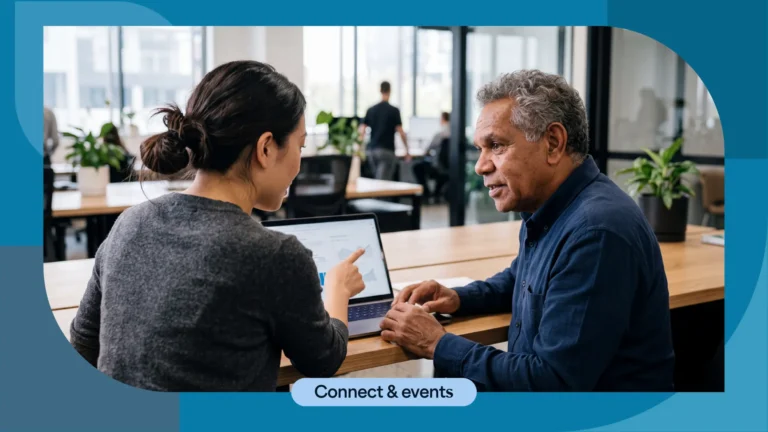
Why joining a community matters more at this life stage than most people expect
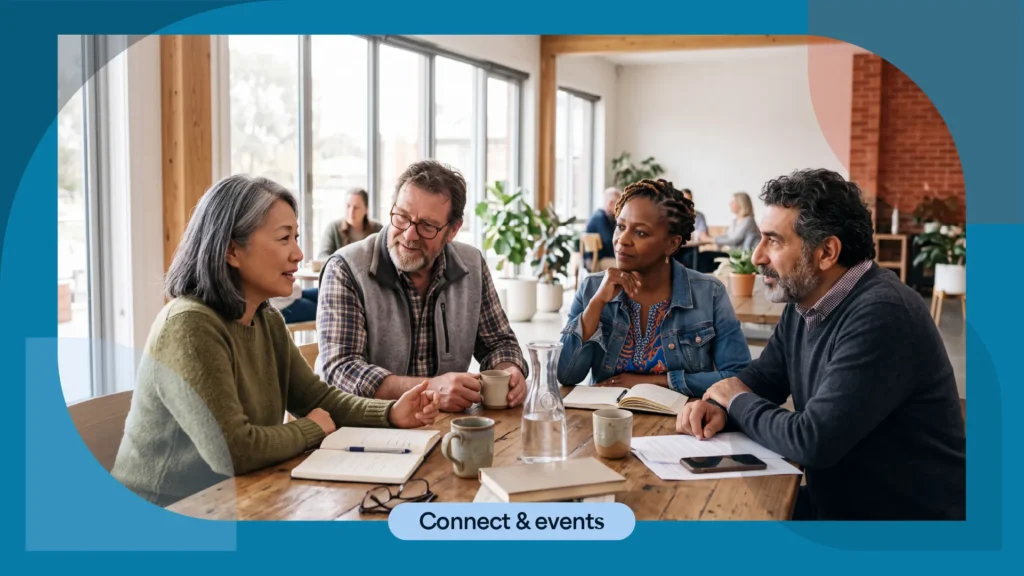
Most adults in their 50s are not joiners. A decade or two of full-on career demands tends to erode the membership of things, the professional associations, the community groups, the networks that were let lapse when the diary got full. And now, with work changing or ending, the social infrastructure that work provided automatically is no longer there.
The research on what this means is fairly clear and worth taking seriously.
What work was providing without you noticing
Work is one of the primary sources of social connection for most adults. Research published in Social Science and Medicine has consistently found that workplace social relationships are among the strongest predictors of wellbeing for working-age adults — in some studies, more predictive than relationships outside work. When work changes or ends, this social infrastructure does not automatically transfer to somewhere else. It simply disappears.
The practical consequence: people who retire or significantly reduce their working hours often experience a social contraction that they did not anticipate and that takes a real toll on their wellbeing. Loneliness in the 50-to-70 age bracket is more prevalent than most people admit, partly because it does not match the image of what this life stage is supposed to look like.
What community actually provides
Being part of a community, a group of people with shared interests, shared circumstances, or shared values provides several things that are hard to replicate individually:
- Regular, low-effort social contact: you do not have to initiate every interaction when you are part of an ongoing group
- A sense of belonging that is not contingent on your professional role or status
- Access to the collective knowledge and experience of people who are navigating similar terrain
- Opportunities to contribute in ways that feel meaningful without requiring a formal role
- Witnesses to your life — people who know your context and can notice how things are going
The 50+ community specifically
There is something specific about being in community with people at the same life stage. Not because other ages and stages are less interesting, but because the shorthand is different. You do not have to explain what it feels like to be passed over because of your age, or to be wondering whether this is the last chapter of your career, or to be managing the competing demands of ageing parents and professional transition. The context is shared.
This shared context makes the community itself more efficient, conversations get to depth faster, support is more targeted, and the collective intelligence about how to navigate this life stage is genuinely useful rather than generic.
There is a difference between being connected and belonging. Belonging requires a context where you are known, not just visible. That is what community provides.
How to find the right community
Not every community will suit every person. Some practical ways to find the right fit:
- Start with shared interest rather than shared demographics: a community built around something you care about (an industry, a cause, a hobby, a life stage) is more likely to generate genuine connection than one built around proximity alone
- Try before you commit: most communities have lower-stakes entry points (an event, a webinar, a forum) that let you experience the culture before investing significantly
- Be willing to show up more than once: community connection rarely happens in a single interaction. The research on friendship formation consistently shows that repeated exposure over time is what builds genuine connection
Next50’s Connect & events section is a starting point both for the online community and for finding local meetups in your city.