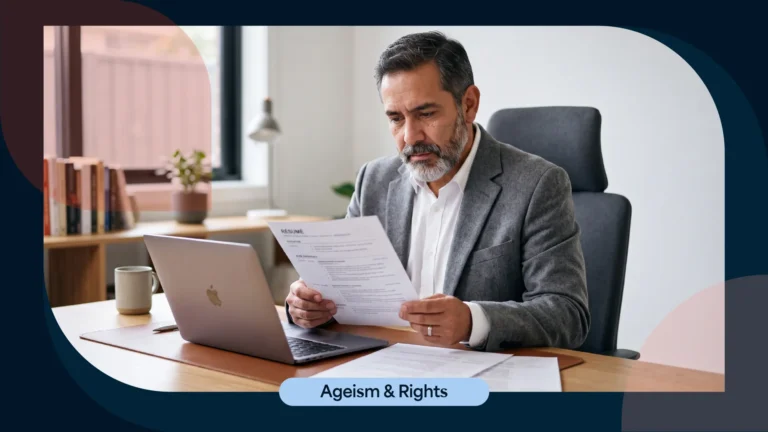
How to respond when a recruiter goes silent after finding out your age
It follows a familiar pattern. The phone screen goes well. The recruiter sounds enthusiastic. You are asked to send your full CV and then nothing. The follow-up email disappears into silence. The role gets filled, you find out later, by someone significantly younger.
Recruiter ghosting is common enough on its own. But when it happens specifically after your experience level and therefore your approximate age becomes apparent, it is hard not to draw conclusions.
Here is how to handle it with clarity, self-respect, and a realistic sense of what is worth your energy.
First: document what happened
Before you do anything else, write down the timeline while it is fresh. Date of initial contact, what was discussed, when you submitted your full CV, any follow-up communications. If the silence followed a specific disclosure, your graduation year, length of experience, a reference to a role from the nineties, note that too.
This is not about building a legal case immediately. It is about having a record that is accurate and unemotional, which is valuable whether you decide to push back, report, or simply move on.
Follow up — once, clearly
Send one follow-up email. Not apologetic, not aggressive. Direct and professional:
“Hi [name], I wanted to follow up on our conversation from [date]. I am still very interested in the role and would welcome any update on timing or next steps. Please let me know if you need anything further from me.”
One follow-up is reasonable. Two starts to look like pressure. If there is no response after a second attempt, the conversation is over and the absence of a response is itself useful information.
Ask for feedback — you may be surprised
If the role is filled and you hear nothing, you are entitled to ask for feedback. Most recruiters will not give you honest feedback about age-related concerns, they know the legal exposure, but some will give you genuinely useful information about where your application fell short.
Frame the request as professional development, not confrontation: “I would really value any feedback on my application that might help me strengthen future submissions.”
If the feedback you receive feels evasive or inconsistent with the conversation you had, that is worth noting in your records.
When to consider a formal complaint
If you have a pattern of similar experiences, not just one incident and you have documented evidence that age was a factor, you may have grounds for a complaint to the Australian Human Rights Commission. A single instance of ghosting is almost impossible to prove as discrimination. A documented pattern is a different matter.
It is worth speaking to a workplace lawyer for an initial assessment before deciding whether to proceed. Many offer a free first consultation.
Protect your energy for where it matters
The hardest part of this experience is not the silence itself, it is what the silence invites you to believe about yourself. That you are past it. That the market has moved on. That your experience is a disadvantage.
None of that is true. What is true is that some employers and recruiters are operating with outdated, discriminatory assumptions and those are not the environments where you will do your best work anyway.
The recruiter who ghosts you after seeing your CV has done you a favour, of sorts. They have saved you from spending energy on a workplace that was never going to see your value clearly.
Next50 only accept age-inclusive employers organisations that have demonstrated a genuine commitment to hiring and retaining experienced workers. Start there.